PROJECT
Page snapshot
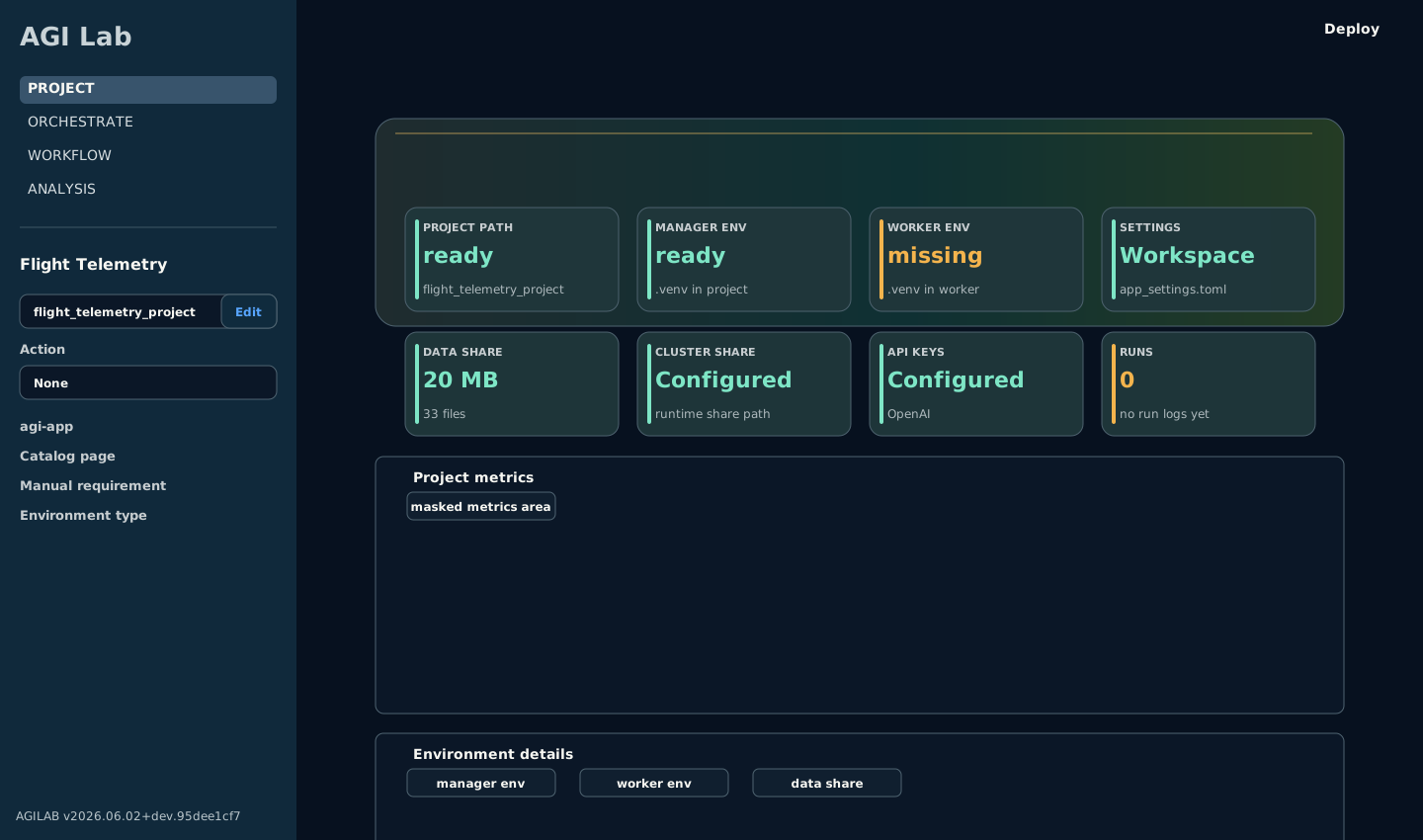
PROJECT presents the active project’s environment and data readiness. Use the header’s Edit project action to open the Python-backed source and configuration editor.
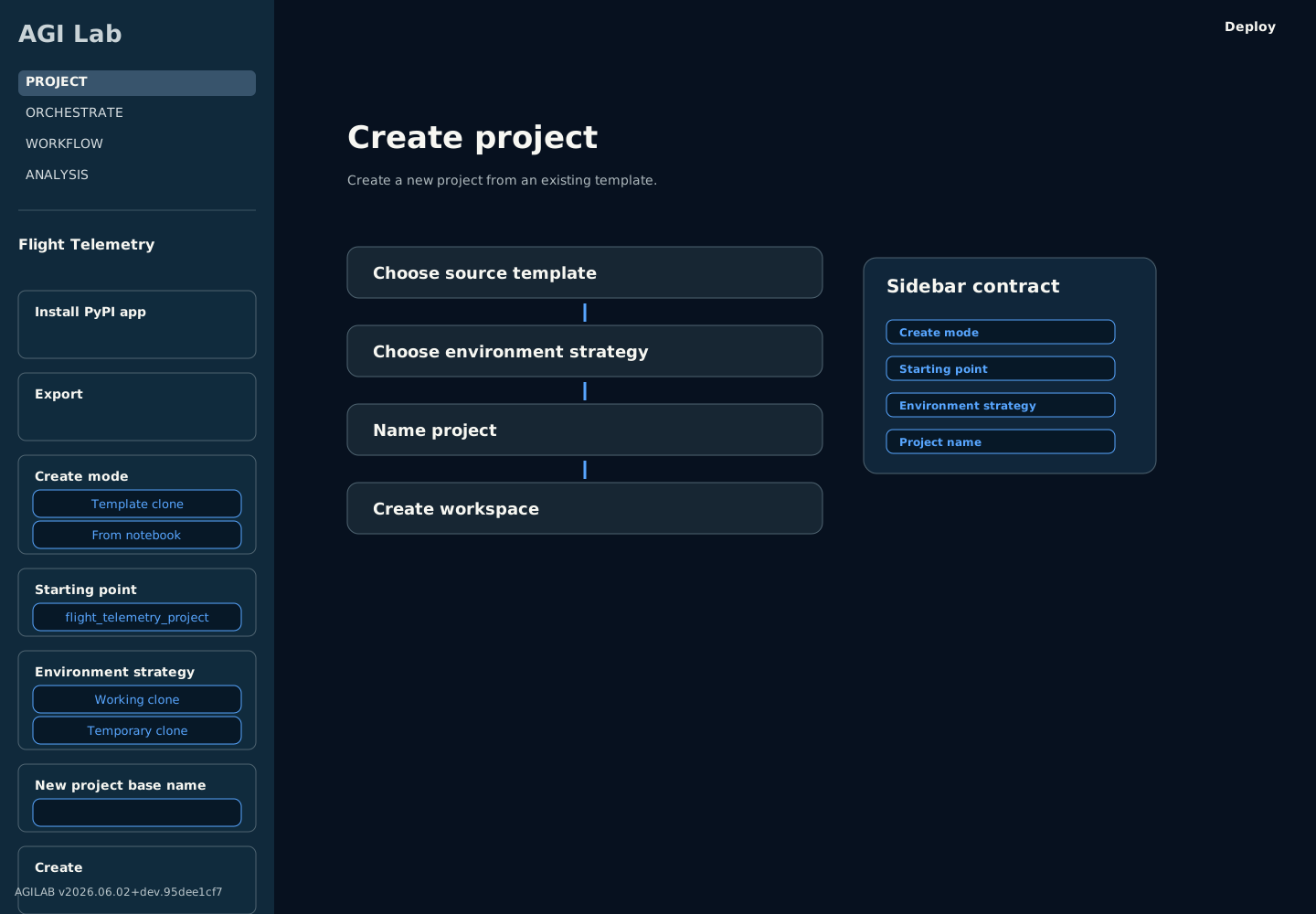
The project editor’s Create action groups the starting point, environment strategy, and project name controls. These retained Python-backed controls render in the native React host.
Project selection and editor actions
Choose the active project with the React header’s Project selector. PROJECT shows its status and next actions; Edit project opens the source/configuration editor. Open Tools in the header to reach the editor’s Quick actions control, then use its Action selector for Create, Import, Export, Rename, or Delete.
The contextual Tools panel starts closed on desktop and mobile. Hiding and reopening it preserves editor drafts and form entries. Project selection and the main workspace navigation stay in the header. Standalone Python pages expose the same panel through a Tools button.
Read Documentationopens this guide in the hosted public docs when reachable, and falls back to the locally generated docs build when available.The default
Editview exposes the source and configuration sections described below.Exportis a separate Quick action that writes<project>.zipto${EXPORT_APPS}using the active export filter.Createlets you clone either the current project or one of the templates discovered on disk. The helper normalises the name (adds the_projectsuffix) and rejects duplicates before cloning. You now choose anEnvironment strategy:Temporary clone (share source .venv)keeps the source.venvby symlink. It is fast and lightweight, but deleting or rebuilding the source environment can break the clone too.Working clone (no shared .venv)creates the project without a shared.venv. This is the safer choice for real development; runDeploy scheduler & workersbeforeRUNto recreate the environment for the clone.
Renamenow preserves the existing project.venvwhile switching the project folder to the new name, then removes the original folder and switches the session to the renamed project once the operation succeeds.Deletepermanently removes the active project after you tick the confirmation box. When the folder is deleted, AGILab automatically selects a remaining project so you can keep working.Importrestores a project archive produced byExport. You can request a clean import (strips.gitignorefiles) and the modal overwrite flow guards against accidentally replacing an existing project.
Tutorial: create a project
Use this when you want to duplicate an existing project before editing code or settings.
Select the source project in the React header and open Edit project.
Open Tools in the header; in Quick actions, set Action to Create.
Select the source project or template you want to duplicate.
Enter the new project name. AGILab adds the
_projectsuffix if needed.Choose the environment strategy:
Temporary clone (share source .venv)for quick experiments.Working clone (no shared .venv)for real development work.
Confirm the clone action.
Select the new cloned project in the header’s Project selector.
What to do next:
If you chose
Temporary clone, you can usually inspect or edit the clone immediately.If you chose
Working clone, go to ORCHESTRATE, runDeploy scheduler & workers, then runRUNbefore expecting the clone to behave like the source project.If the clone should expose optional analysis bundles, open
Configuration / app settingsand check the[pages]section.
Main Content Area
The default
Editview reveals a stack of expanders backed by the in-browser code editor. Each expander streams syntax-highlighted content and writes any saved changes straight back to disk:Runtime / manager environmentedits the projectpyproject.tomlso you can manage dependencies without leaving the browser.Runtime / worker environmentedits the worker’s declared Python environment.Runtime / uv overridessurfacesuv_config.tomlfor supplemental dependency constraints.Code / managerandCode / workerexpose the main orchestration modules. The editor offers class/function/attribute pickers so you can focus on specific sections before saving.Runtime / export filtercontrols the.gitignorerules that the export flow applies when producing the archive.Configuration / app settingsopens the per-user workspace~/.agilab/apps/<project>/app_settings.toml. AGILab keeps the[args]and[pages]sections in sync with the Orchestrate and Analysis pages. The file is seeded from the app’s versioned sourceapp_settings.toml(<project>/app_settings.tomlor<project>/src/app_settings.toml) when the app is first loaded.Documentation / READMEallows quick edits to the projectREADME.md.Configuration / arguments modeltargetsapp_args.pyin the app package. Use it to synchronise default arguments with the Orchestrate page.Configuration / arguments UIdisplays (and creates if missing) the optionalapp_args_form.pyweb snippet used to render a custom parameter UI in Orchestrate.AI / pre-promptserialisespre_prompt.jsonso you can tailor the prompt used by the WORKFLOW assistant.
Troubleshooting and checks
Use these checks if Project actions do not behave as expected:
If no projects are listed, verify the active
appsdirectory and confirm the target project folder contains a validREADME/app_managerstructure.If Delete does not refresh the UI, re-open the page and re-select the same project; the deletion flow is asynchronous and can race with the list rebuild.
If edits appear lost after saving, confirm you are still in the same project and that write permissions are available for the selected source file.
If a
Temporary clonestops launching, check whether the source project.venvwas deleted or rebuilt. Switch to aWorking clonewhen you need a stable long-lived project.If import/export fails, check free disk space and confirm
${EXPORT_APPS}and the project path are writable.
See also
Main Page for the global page map.
ORCHESTRATE for orchestrating installs/distribution after project setup.
AGILab Architecture for how project files feed workers and runtimes.
Support
Support: open an issue on GitHub